
One plan for
the whole house.
A whole-home renovation treats the house as a single project: structure, systems, layout and finishes decided together, built in the right order by one accountable team, finished to one standard.
What "whole-home" means
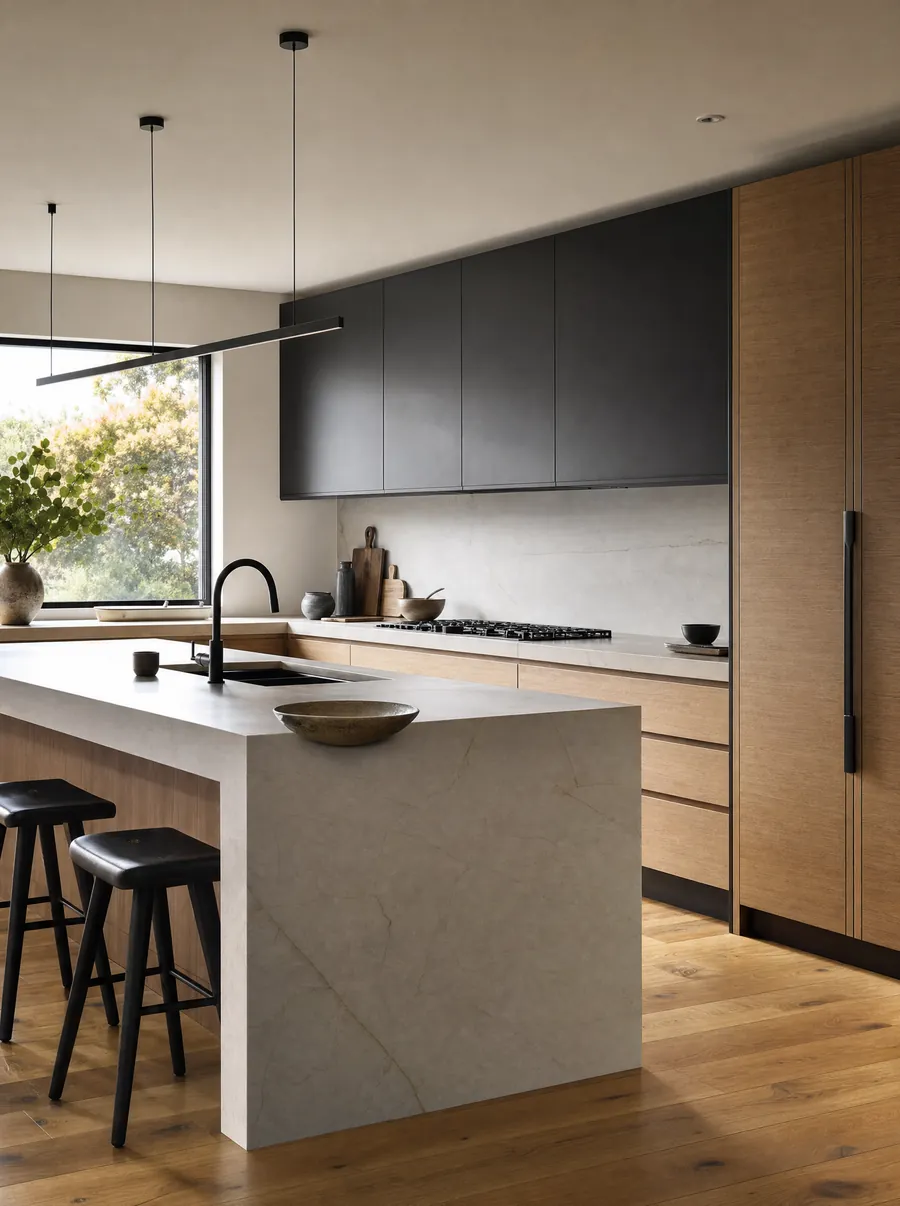
A whole-home renovation is a project that touches most or all of a house at the same time. It usually includes some combination of reworking the floor plan, replacing or upgrading the mechanical systems, new windows and doors, a new kitchen, new bathrooms, new flooring throughout, and fresh finishes in every room. It can also include an addition, exterior work and structural repairs.
What makes it different from a series of room remodels is coordination. The electrical panel is sized for the whole house, not one kitchen. The floor runs continuously instead of being patched at doorways. The trim profile is the same in every room. The result is a house that feels designed rather than accumulated.
Why do it all at once
Renovating room by room over several years is a reasonable path for some households. Doing it as one project has real advantages.
- Systems are designed once. Plumbing, electrical, heating and cooling are planned for the final house, so nothing is redone later to accommodate a room that came after.
- Trades mobilize once. Each trade comes through the house in sequence instead of returning for every room, which is more efficient and less disruptive.
- Finishes are consistent. Flooring, doors, trim, hardware and paint are chosen as a set and installed together.
- Decisions are made together. Moving a wall in the kitchen affects the room next to it. Planning the whole house avoids fixing one room at the expense of another.
- You live through it once. One period of disruption, then it is done.
A house that feels designed, not accumulated.
Setting priorities
The first planning task on a whole-home project is deciding what matters most, because budgets are finite and a house can absorb any amount of money. We work through it with you in layers. First, what must be fixed: structure, water intrusion, unsafe wiring, failing systems. Second, what changes how you live: the floor plan, the kitchen, the bathrooms, light and storage. Third, what you will see and touch every day: floors, doors, trim, hardware, lighting. Fourth, everything that would be nice if the numbers allow.
Working in that order means the money goes where it does the most good and nothing is finished beautifully on top of a problem.
Working with older houses
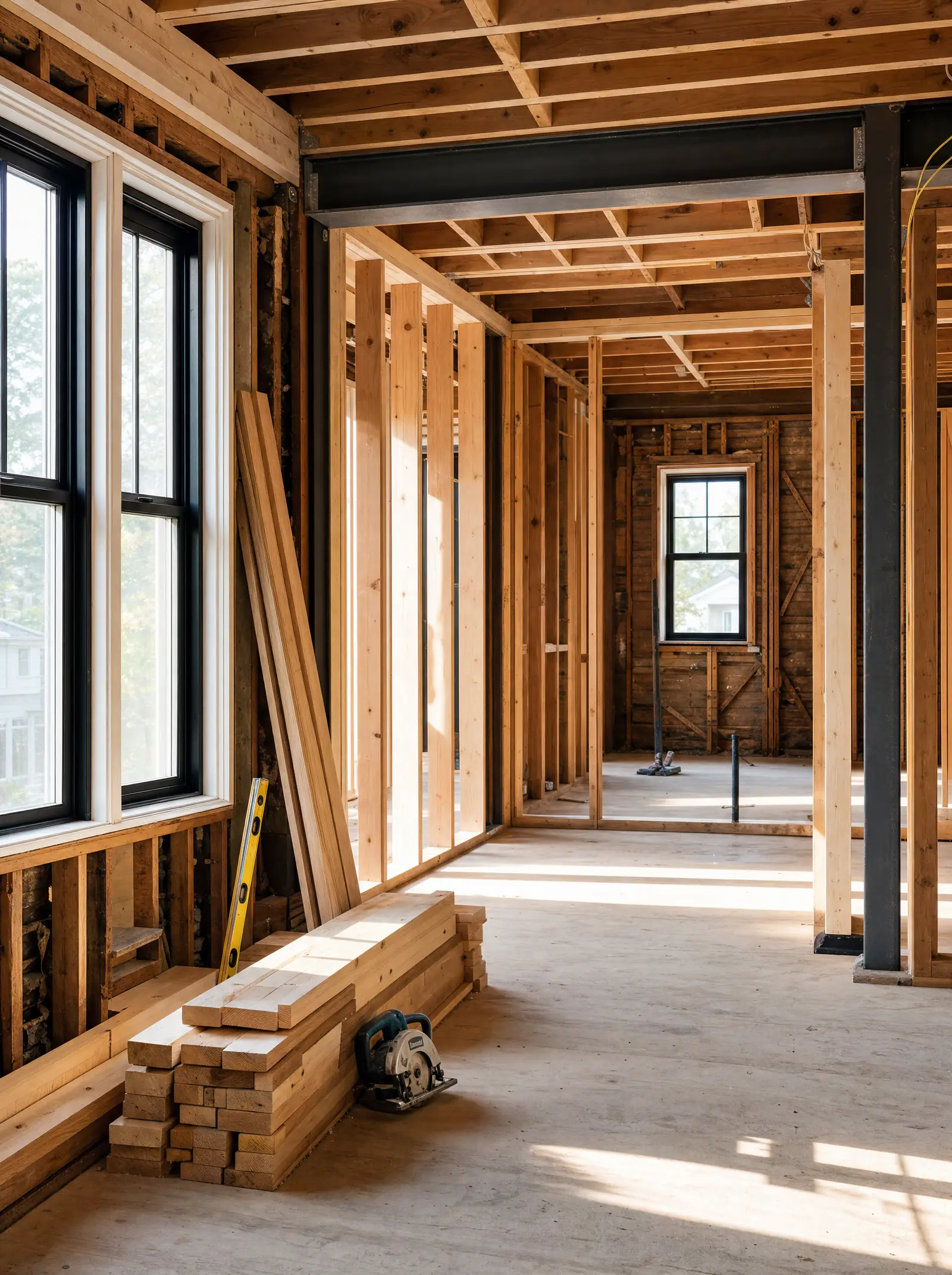
Older houses are usually worth renovating precisely because of what they have: location, character, proportions, materials that are hard to replace. They also hide things: wiring that was never meant for modern loads, plumbing that has been patched for decades, framing that was modified by someone in a hurry, insulation that is missing or wet.
We investigate as much as possible before the plan is finalized, by opening small sections where it matters and reading the house for clues. We build a plan for the unknowns, and when something unexpected turns up, you hear about it from us first, with options and their implications, before anything changes. That is the only honest way to run an older-house project.
Living arrangements
For a true whole-home renovation, moving out for the heaviest phase is often the better experience, because there is a period when the kitchen, bathrooms and much of the floor are out of service at once. Where staying is necessary, we sequence the work so that a working kitchen, a bathroom and bedrooms remain usable for as long as possible, and we set up protection and daily cleanup to keep the occupied part of the house livable. We will talk through what is realistic for your household before the schedule is set.
How the project runs
- Step 01
Conversation
We listen first. What you want to build, how you'll use it, what matters most and what you're hoping to avoid.
- Step 02
Scope & plan
Site visit, scope, selections and a written plan so everyone agrees on the work before any of it begins.
- Step 03
Build
A protected, organized site and regular updates. When something changes, you hear it from us first.
- Step 04
Walkthrough
We walk the finished space together, close out the punch list and hand it over ready to live in.
On a whole-home project, the planning step is substantial: drawings, engineering where structure changes, mechanical design, a full selections schedule and permits. The build then moves through the house in a logical order, demolition and structure first, then rough systems, inspection, insulation and drywall, then finishes from the top of the house down. Regular walkthroughs keep you oriented, and the final walkthrough covers every room with a single punch list.
Ready to rethink the whole house? Tell us about it and we will help you set priorities.
?Questions
Common questions.
Should we renovate everything at once or in phases?
Can we stay in the house?
How do you handle surprises in an older house?
Is a whole-home renovation better than building new?
+Related services
Often planned together.
Projects rarely stop at one room. These are the services most often scoped alongside this one.
Tell us what
you're building.
Five short questions and our team will reach out to talk it through. No pressure, no obligation.
Start your project